

Striking Versus Grappling Combat Sports: Differences in Aggression and Psychological Self-Regulation
Abstract
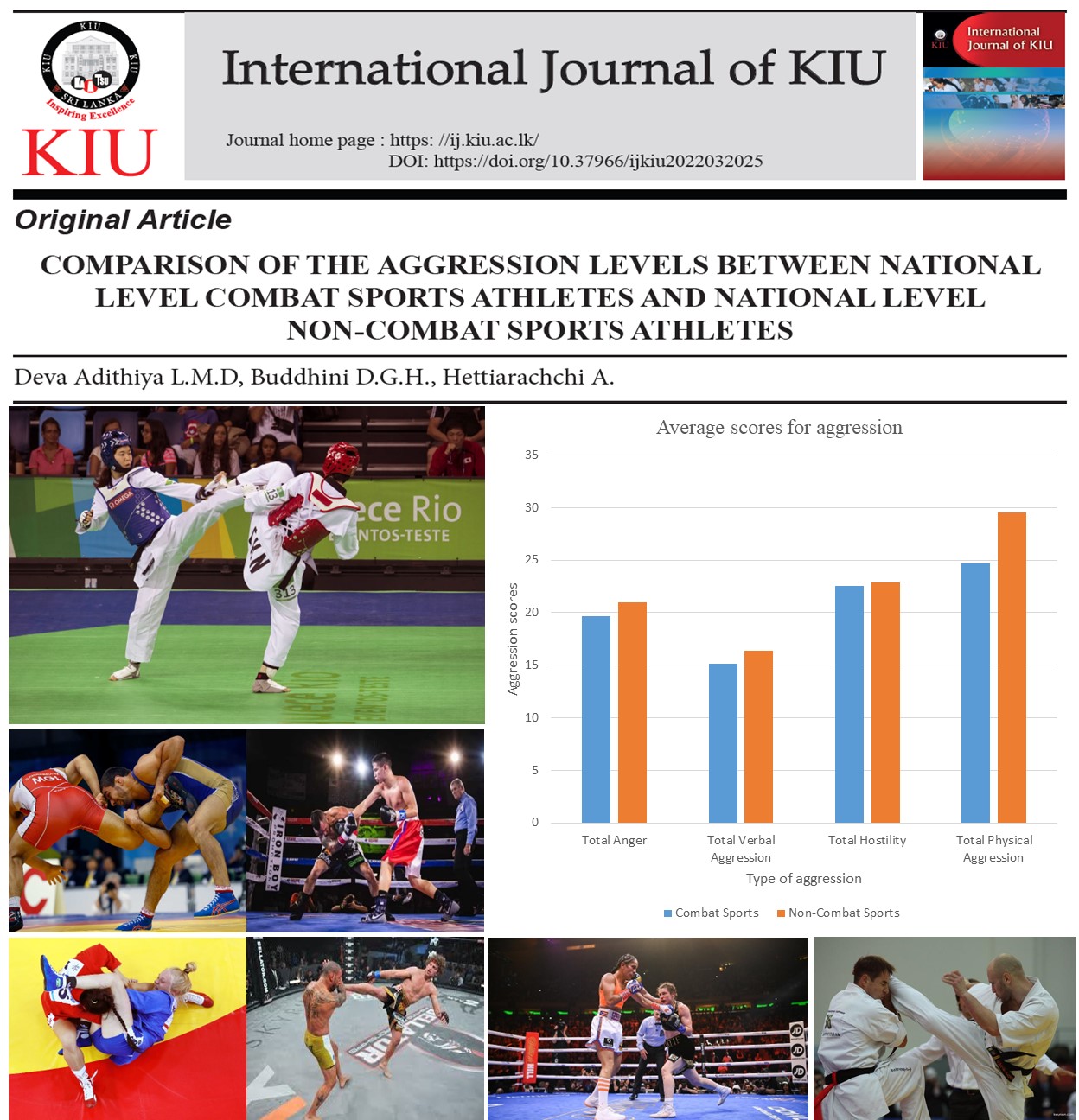
Background: Striking and grappling combat sports differ considerably in the techniques permitted; however, the extent to which these differences relate to aggression and psychological self-regulation remains uncertain.
Methods: Using a newly recruited national-level cohort collected between August and December 2024, this cross-sectional study extended previous research conducted in Sri Lanka. Of the 320 participants, 274 were strikers, and 40 were grapplers, while six mixed martial arts athletes were excluded from the primary comparison. Aggression, emotion dysregulation, and self-control were assessed using the Buss-Perry Aggression Questionnaire, the Difficulties in Emotion Regulation Scale-Short Form, and the Brief Self-Control Scale, respectively. Data were analysed using Hedges’ g, Welch’s t-tests, and HC3-robust regression models.
Results: No significant differences were observed between the two groups in overall aggression (79.13 ± 16.74 vs. 78.54 ± 16.51; p = .839; g = 0.04), emotion dysregulation measured using the 15-item scale (40.20 ± 10.06 vs. 39.74 ± 10.53; p = .800; g = 0.05), or self-control (44.74 ± 9.43 vs. 44.58 ± 7.98; p = .909; g = 0.02). Similarly, no significant differences were identified across the individual emotion-regulation and aggression subscales. These findings remained consistent after controlling for age, sex, years of training, and recent competition exposure.
Conclusion: Striking and grappling athletes did not differ significantly in aggression, emotion dysregulation, or self-control. Thus, the techniques employed in competitive combat sports do not necessarily reflect an athlete’s dispositional level of hostility.
Keywords
Keywords: aggression; combat sports; emotion regulation; self-control; Sri Lanka



Related Articles